Category Archives: Uncategorized
Apr 1, 2021 Pamela Samuelson
Professor Carroll is not the first copyright scholar to have asserted that text and data mining (TDM) is and should be lawful as a matter of copyright law (and he probably won’t be the last). The hook that pulled me through the 72 pages of his excellent article was the introduction’s announced intention to explain why use of TDM tools to run searches on digital repositories of infringing copies of copyrighted works do not infringe, at least as a matter of U.S. copyright law.
Text and data mining is a multi-stage technical process by which researchers compile and refine large quantities of text and other data so that it can be processed with statistical software to detect patterns that would be difficult or impossible for a human to perceive without the aid of the machine. The article considers the legality of TDM using SciHub as an exemplar. SciHub is a well-known repository of vast quantities of the scientific journal literature. Many scientists want to do TDM research using SciHub, but courts have held that that database is infringing. Although SciHub has more than once been forced to shut down, it has re-emerged every time and can still be found on the Internet.
Well-documented in this article, as well as in the technical literature to which Carroll copiously cites, is the promise of myriad scientific insights that researchers’ use of TDM tools could unlock in a wide variety of fields. (For those not already conversant with TDM technologies, this article provides a very useful primer that is neither too nerdy nor too simplistic for lay readers to follow.) If promoting progress in science and useful arts continues to be copyright’s constitutional purpose, the logical conclusion follows, Carroll intimates, that copying of in-copyright works to enable TDM research is and should be lawful.
Thanks to the Supreme Court’s Eleventh Amendment jurisprudence and the audacity of Google and the University of Michigan when agreeing to allow Google to scan all eight million books in the university’s library in exchange for the library’s getting back a digital copy, and thanks also to the Authors Guild for its unsuccessful lawsuits charging Google, the University of Michigan and its HathiTrust repository with copyright infringement, we know that digitally scanning in-copyright books for TDM and other non-consumptive purposes is non-infringing.
Carroll methodically works through each type of copying that happens in the course of collecting, formatting, processing, and storing data for TDM purposes. The article works through the relevant copyright case law for each type of copying that TDM involves. The ground over which the article travels will be familiar to many readers, but it provides a useful recap of how the law of digital copying has evolved over the last two decades.
Copyright is not, of course, the only potential obstacle to TDM research. Numerous proprietary publishers of scientific journals offer institutional database subscriptions to universities and other research institutions. However, those digital repositories are not interoperable. Researchers consequently cannot run searches across various databases. Cross-publisher collaborations are rare, and the license terms on which databases are available may impair researchers’ ability to make the full use of TDM tools. Publishers and the Copyright Clearance Center are promoting licensing of TDM as a value-added service and some of these licenses are more restrictive than TDM researchers would want.
One can understand why scientific researchers, even at institutions with institutional database subscriptions, would be attracted to using SciHub for TDM research. It is easier to use than some of the publisher repositories; the SciHub database is far more comprehensive than any of the proprietary databases; and there are no license restrictions to limit researcher freedom to investigate with TDM tools to their hearts’ content.
Downloading SciHub seems a risky strategy for TDM researchers who do not want to be targets of copyright infringement lawsuits. Carroll argues that running TDM searches on the SciHub collection hosted elsewhere involves only the kind of transient copying that the Second Circuit found too evanescent to be an infringing “copy” of copyrighted television programming in the Cartoon Networks case. The results of the TDM research would be unprotectable facts extracted from the SciHub collection.
This is a bold assertion, which is well-documented. Read it for yourself to see if you agree.
Mar 5, 2021 Christopher J. Sprigman
Carys J. Craig,
Transforming ‘Total Concept and Feel’: Dialogic Creativity and Copyright’s Substantial Similarity Doctrine, 38
Cardozo Arts & Ent. L. J. __ (Forthcoming), available at
SSRN.
Carys Craig is far from the first scholar to criticize copyright law’s vague “substantial similarity” test for infringement, especially when that test is based on the even vaguer “total concept and feel” standard, but the difference is that in her new article, Transforming “Total Concept and Feel”: Dialogic Creativity and Copyright’s Substantial Similarity Doctrine, Professor Craig advances an alternative approach that might get some traction.
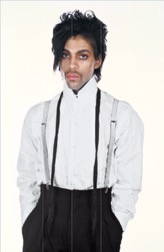
Professor Craig centers her critique on a recent case that involves the two images below. A jury could look at these two photos and decide that an ordinary person could view the “total concept and feel” of the two images as the same. But Craig explains why that’s not the right outcome.
The image on the left is a photograph by Lynn Goldsmith. The subject, of course, is the late and much-lamented Prince Rogers Nelson: the musician the world knew and will remember as “Prince.” Goldsmith made the photograph in 1981, just as Prince was breaking into the public’s consciousness. The photograph was made during a shoot that was originally undertaken for a planned story on Prince in Newsweek—a story that never ran in that magazine. In 1984, Vanity Fair licensed the Goldsmith photo for $400, but they didn’t use it in the story they published on Prince. Instead, they gave it to pop art colossus Andy Warhol, who cropped the photograph down to Prince’s face and used it as the raw material for 16 iconic portraits in Warhol’s “Prince Series,” one of which, pictured below at right, was used to illustrate the Vanity Fair article.

After Vanity Fair used the Warhol portrait again as the cover illustration for a 2016 special issue commemorating Prince’s death, Goldsmith made her displeasure known. The Warhol Foundation responded by filing a complaint in federal district court in Manhattan seeking a declaratory judgment that Warhol’s Prince Series did not infringe the Goldsmith photograph. The Foundation argued both that the Warhol portraits were not substantially similar to the Goldsmith original, and that the Warhol works were protected as fair uses. In 2019 the district court ruled for the Warhol Foundation, finding that the works in the Prince Series were fair use without considering the Warhol Foundation’s substantial similarity arguments. The case is now on appeal to the Second Circuit.
Professor Craig’s article focuses on the substantial similarity issues that the litigation over Warhol’s Prince Series raises. It is perhaps an odd fact that on perhaps the single most important issue in copyright law—the degree of similarity between a plaintiff’s work and a defendant’s that is necessary to support liability—the copyright statute is conspicuously silent.
In the absence of any statutory command, the federal courts have developed a set of related tests for similarity that all boil down to the same ultimate inquiry: would an ordinary lay observer, reader, or listener (the final word used depends on the medium involved) consider the works to be impermissibly similar?
As Professor Craig notes, the reaction of an ordinary lay observer is certainly relevant, but it should not comprise the entirety of the test for what is referred to as “substantial similarity.” Section 102(b) of the Copyright Act directs that courts must not base infringement findings on facts, ideas, concepts, and other elements of creative works that are outside the scope of what copyright protects. And it’s true that before remitting an infringement lawsuit to the ordinary observer’s judgment, courts often perform an analysis in which they dissect the work into protectable and unprotectable elements, disregard or “filter” the latter, and compare the degree of similarity with respect only to the former.
But courts do this only to ensure that there is enough similarity in protected expression for the case to go to the jury, which will then apply the ordinary observer test. So if a reasonable jury could find infringement based on similarity in protected elements alone, the “dissection” phase of the test concludes and the case is given to the jury to apply the ordinary observer test. Often, courts treat the two phases of the analysis as disjoint. That is, juries often are not instructed, in performing their ordinary observer analysis, to disregard similarities that relate to elements of the plaintiff’s work that the court previously has found unprotected.
Consequently, the jury’s ordinary observer inquiry often is little more than the application of unguided intuition. As Professor Craig notes—and others have noted—nothing in the “ordinary observer” directs that juries, or even judges in bench trials, confine their intuitions about impermissible similarity to the protectable elements of the plaintiff’s work.
Professor Craig argues that this problem is made worse by a formulation of the substantial similarity test that appears in decisions of both the Ninth and Second Circuits directing juries to assess similarity in terms of the “total concept and feel” of the two works at issue. That formulation is indeed a misfire. It directs juries to focus on an element, the work’s “concept,” that Section 102(b) of the Copyright Act identifies specifically and by name as unprotectable. The formulation also directs juries to focus on an element, the “feel” of a work, that may differ from observer to observer and is only dubiously copyrightable even when its content can be articulated with any measure of precision.
In short, copyright’s substantial similarity test is a doctrinal failure. But Professor Craig has a suggestion for how to salvage the test—one which uses elements of the current approach and therefore is in the nature of a course-correction that a court might actually entertain. Here, in a nutshell, is Professor Craig’s approach:
[T]he unlawful appropriation step should begin with the holistic comparison of the two works to determine if their overall aesthetic appeal is substantially similar. If the works are, perceived in their totality, substantially different, then the infringement inquiry should end there: The defendant has created a non-infringing new work that is, in its “total concept and feel,” more than merely a colorable imitation of the plaintiff’s work. If the works are substantially similar in their overall impression, the decision-maker should proceed (with the necessary expert evidence) to dissect the plaintiff’s work into protectable and public domain elements, and to filter out the latter from the infringement analysis. The defendant’s work can then be compared again to the protected elements in the plaintiff’s work. If they are not substantially similar after the unprotected elements have been appropriately filtered out, there is no infringement, notwithstanding the similarities in their “total concept and feel.” If, on the other hand, the defendant’s work is substantially similar to the protected expression in the plaintiff’s work, prima facie infringement is established, and the decision-maker can proceed to consider the availability of a fair use defense.
Professor Craig revises the substantial similarity test at two levels. First, she’s re-fashioned the “total concept and feel” test into a tool for identifying when a defendant’s work differs so substantially from a plaintiff’s that it should escape copyright liability altogether. In such instances, defendant’s copying was in the service of creating something substantially new—an outcome which fulfills copyright’s grounding purpose of encouraging the production of new works, and which therefore, Professor Craig argues, should be outside the scope of the copyright holder’s monopoly.
The Warhol Prince Series, Professor Craig suggests, should escape liability: Warhol’s works, which boldly outline Prince’s face against various brightly-colored backgrounds, portray Prince as an icon at the height of his power, as distinguished from the young, vulnerable artist captured in the Goldsmith photograph. It is unclear precisely how Warhol achieves this transformation; Warhol’s ineffability is entwined with his greatness. It is clear—at least to me—that Warhol does in fact produce work that is both recognizably based on the Goldsmith and yet indisputably new.
Professor Craig’s first move thus re-conceptualizes the “total concept and feel” formulation as a helpful way of framing the inquiry into whether the defendant’s work is new enough to slip the bonds of plaintiff’s copyright, rather than as a misleading way of inquiring into the presence of the degree of similarity required for liability.
Professor Craig’s second innovation is equally helpful. She re-positions the “dissection” part of the substantial similarity test to a place—after the revised “total concept and feel” inquiry rather than before—where it can actually do some good. After Professor Craig’s re-ordering, the two parts of the test are no longer disjoint. Rather, dissection must be undertaken only if the initial inquiry does not fall in favor of the defendant. In that case, the “total concept and feel” of defendant’s work is close enough to plaintiff’s where the factfinder, be it jury or judge, must inquire whether the similarities between the two works are due to defendant appropriating substantial protected expression, or re-using unprotected facts, ideas, concepts, such stock elements that are properly treated as scenes a faire, or expression that merges with underlying ideas.
While I would have welcomed an explanation of how her revised substantial similarity test could be administered in a jury trial, the article merits a close reading, and I recommend it.
Feb 2, 2021 Christophe Geiger
Martin Husovec,
The Essence of Intellectual Property Rights under Art 17(2) of the EU Charter, 20
German L. J. 840 (2019), available at
SSRN.
The complex interface between intellectual property and fundamental rights is a fascinating field for research which has attracted considerable scholarly attention in the last decades. U.S. IP scholars are well aware of fundamental rights under the U.S. Constitution. The European Union has “constitutionalized” IP rights as well as fundamental freedoms in the Charter of Fundamental Rights of the EU placing them at the very top of the hierarchy of norms.
In The Essence of Intellectual Property Rights under Art 17(2) of the EU Charter, Martin Husovec explores the constitutional notion of the “essence of rights”—according to which any fundamental right has an inviolable core that needs to remain untouched (or only touched with very strong justifications) from any legislative activity—in order to determine if Art. 17(2) of the EU Charter includes a notion of essence of IP rights. If so, this would have profound consequences for legislators as it could prevent changes made by them to the IP legal framework, or at least make them very difficult. In particular, this question has high relevance in the situation where a legislator, after empirical analysis and assessment of the merits of a particular IP right, would decide to legislate it away because of its incapacity to deliver its promises.
This is important since there is a tendency in the EU to create a new IP right any time a new intellectual asset emerges, and therefore it should be possible at some point in time to repeal it if the expected results do not materialize. A good example is the creation in the nineties in the EU of the new sui generis IP right for database producers, which after several evaluations done by the European Commission turned out not to have had the expected incentive function for European players to create more and better databases. In short, it failed to deliver its promised results.
This fascinating question however, developed in more length by the author in another publication, is only touched upon in this article, as this discussion is only the consequence of the acceptance that there is an ‘essence’ for IP rights. The author analyzes therefore the two different opposing constitutional theories of ‘essence’. In fact, as Husovec recalls, “the absolute theory of essence says that essence of rights cannot be interfered with or taken away, including by the legislator. The relative theory of essence, on the other hand, claims that an interference with essence is just a more serious interference which is still subject to the typical proportionality analysis”. This means that under the absolute theory of essence, there would be an untouchable core of rights which would make any legislative intervention unconstitutional, while under the relative theory, the interference with the essence of an IP right would only lead to a particular level of scrutiny with regard to competing interests and fundamental rights that justify this legislative intervention.
In order to find out if such a perpetual core of rights is recognized in the field of IP, Husovec explores the case-law of the Court of Justice and the European Court of Human Rights as well as selected examples of national case-law. He then compares the way intellectual property protection at the constitutional level is interpreted by these courts with the wording of some international sources also applicable in the European context, such as Art. 15.1(c) of the International Covenant on Economic, Social and Cultural Rights (ICESR), in which the signatory states recognize the right of everyone “to benefit from the protection of the moral and material interests resulting from any scientific, literary or artistic production of which he is the author”.
After careful analysis of several cases implementing Art. 17 (2) of the Charter, Husovec comes to the conclusion that this provision “is void of any inviolable core understood as a red line which cannot be bridged by any considerations of proportionality” and that “any reference to essence in the case-law of the CJEU only points towards a higher level of scrutiny, but not towards an untouchable core of rights that may not be abolished by the legislator”.
Even in Germany, which recognizes the most the idea of core constitutional rights, the German Constitutional court held in the context of IP rights that they are not immune to legislative change. The author concludes that if core rights should ever be recognized, it could be in light of the international obligations resulting from Art. 15 ICESR, but then only to the benefit of creators as physical persons (not corporations). Furthermore, in this context, IP rights would have to be interpreted in an instrumental manner in order to serve the society’s right to culture that this article aims to protect. Thus, Husovec’s theory of legislative power to tailor IP rights to achieve social good bears resemblance to the US “promote the progress of science and useful arts” idea of the US Constitution.
In short, Husovec adds in his article an important building block to the construction of a sound human rights framework for intellectual property rights: that, even despite its potentially “essential” character, balance with other competing rights and public interest rationales still remains at the core of assessing the level and extent of IP protections in both legislatures and courts. In the end, this is very far from any absolutist understanding some have advocated for after the entry into force of Art. 17(2) of the Charter. Moreover, constitutional protection of IP rights will not stand in the way of legislating them away when it is established that they have not delivered on their promises.
Jan 5, 2021 Sarah Fackrell
Aman Gebru,
Patents, Disclosure, and Biopiracy, 96
Denv. U.L. Rev. 535 (2019), available at
SSRN.
A new patent application claims to have invented a process for using turmeric to “augment the healing process of chronic and acute wounds.” Unbeknownst to the patent examiner, this spice has been used for this purpose—for centuries—in India. Because the process isn’t new, it shouldn’t be patentable. But what if the patent examiner doesn’t know about that longstanding prior use?
Because traditional knowledge (TK) isn’t typically found in the sources of information that patent examiners can easily access—such as other patents or printed publications—an applicant may be able to get a patent for something they didn’t invent. Or the patent they get may cover significantly more than whatever refinements or improvements the applicant actually did invent.
Indeed, in the real-life case alluded to above, a U.S. patent did issue. When the fact that turmeric had been long used to treat wounds in India was brought to the attention of the U.S. Patent & Trademark Office (USPTO), the patent was ruled invalid. But for a time, there was a U.S. patent covering this old technology.
If we don’t want patents like this to issue, we need to get better information to U.S. patent examiners. But how can we do that? In Patents, Disclosure, and Biopiracy, Aman Gebru argues that patent applicants should be required to disclose their use of genetic resources or traditional knowledge. This article is noteworthy for its detailed examination of how such a requirement could fit into U.S. patent law, even without legislation. Also noteworthy is its use of law-and-economics arguments for this position rather than the more conventional approaches that have relied on equity and distributive justice arguments.
Gebru argues that a TK disclosure requirement can be justified (for a number of reasons) on efficiency and social welfare grounds. Most persuasively, he argues that an information-forcing rule for TK could lead to better patents. In the case study mentioned before (which involved the longstanding use of turmeric in India), the U.S. Patent & Trademark Office (USPTO) ultimately decided that the claims were not patentable.
Gebru points out that “patent or no patent” is not the only issue at stake. Disclosure of TK use or inspiration could also help the USPTO make sure patent claims match (or at least, match more closely) to whatever the applicant actually invented. If someone devises a legitimately new and useful improvement to a TK process, their patent should cover only that improvement—not the underlying process itself.
Of course, the problem of information asymmetry at the USPTO is not limited to TK. But Gebru argues that it may be particularly acute when it comes to TK. And these case studies give us a window into the human side of novelty.
When we talk about patents and novelty, it’s easy to get bogged down in the details of the statutory scheme. Gebru’s article is a good reminder that novelty is not just about wading through complicated statutory provisions and calculating global effective filing dates.
When we think about novelty, what types of human knowledge and innovation should “count” against patentability? And even if things count in theory, how can we make sure they count in practice? Are there other areas of human knowledge that might falling through the cracks of the U.S. patent system?
All in all, I found this to be a timely and thought-provoking article. I keep recommending it to my students and now I am recommending it to all of you.
Nov 20, 2020 Mark McKenna
Dev Saif Gangjee,
Trade Marks and Innovation?,
in Trademark Law and Theory II: Reform of Trademark Law (Edward Elgar), (forthcoming), available at
SSRN.
In his soon-to-be-published chapter Trade Marks and Innovation?, Dev Gangjee brings needed critical analysis to a growing body of recent research that focuses on the relationship between trademarks and innovation. As Gangjee notes, the claims of this research challenge traditional understandings about trademark law. The “stable consensus,” Gangjee describes, has been that “trade mark law had nothing to do with innovation, the ‘ordinary trade mark [having] no necessary relation to invention or discovery.’” But what if it does?
Trademark law has “nothing to do with innovation” in the sense that eligibility for trademark protection doesn’t consider the mark’s relation to innovation. Marks are eligible for trademark protection, as the Supreme Court held in 1879, because of their source-indicating capacities, not because of any “novelty, invention, discovery, or any work of the brain.” Indeed, the fact that trademark law protects only source indication traditionally has been used as justification for the potentially perpetual rights that a trademark bestows.
In contrast, the patent term is limited precisely because patent law, unlike trademark law, offers protection to “real” innovation that we need others (eventually) to build upon. In recognition of this difference, trademark doctrine has long been hostile to attempts to use trademark or unfair competition as a substitute for patent.
Recently, however, a good deal of scholarship and policy advocacy, particularly in Europe, claims that trademarks do promote innovation. This research is clearly meant to support “stronger” or “more” trademark protection. It is useful to disentangle the conceptual and empirical dimensions underlying these claims.
Some early empirical work focused on trademark registrations. It emphasized that “innovative firms” (usually using number of patent applications filed or R&D expenditures as the measure of innovative activity) apply to register more trademarks. But the fact that trademark applicants also file a lot of patent applications tells us nothing about whether trademarks promote innovation. It probably only indicates that innovative firms are sophisticated IP claimants that create new products and file trademark applications for the names of those new products.
More recent research on trademarks and innovation, however, claims to demonstrate a causal relationship. This research is founded on a pair of conceptual claims about the role of trademarks in the innovation process. One is that branding increases market share and profitability, which allows parties to recoup their investments in innovation (presumably creating additional incentives to make those investments). The premise here is obviously questionable: at best it is true that certain winning brands have greater market share and profitability—at other brands’ expense. Even for the winning brands, however, this is not strong evidence that trademarks promote innovation, only that some trademarks help firms’ profitability, which enables but does not require them to engage in innovative activity.
The second conceptual claim is exemplified by the European Commission’s explanatory memorandum to the draft of the Trade Marks Directive in 2015. There, the EC claimed that “in order to retain [the customers] the ‘mark works … as an engine of innovation: the necessity to keep it relevant promotes investments’ in R&D, which leads in turn to a continuous process of product improvement and development.”
That claim bears some resemblance to standard-fare law and economics justifications of trademark protection in the US—namely that trademark protection, by fixing credit and blame, promotes consistent quality. But the EC’s claim is importantly different: traditional economic arguments focus on promotion of *consistent* quality, not necessarily high quality. Denny’s marks are perfectly good marks because we always know what a Moons Over My Hammy (a scrambled egg sandwich) will be like. Trademark law is indifferent to the fact that it will, by most accounts, be consistently bad. The more robust claim, exemplified in the EC memo, is that trademarks help attract customers, and to keep those customers, firms must innovate.
One striking aspect of this new conceptual framing is its frank admission that brands drive demand. Starting with Ralph Brown, trademark scholars have long been concerned that trademarks “sell the goods” by promoting (or reflecting) more product differentiation than a competitive market would otherwise supply, and that excess product differentiation is often inefficient. To that charge, law and economics scholars (and, overwhelmingly, courts) have responded that trademarks merely provide information about the source of goods, and that consumers value the goods for reasons intrinsic to the goods. The new research turns Brown’s concern upside down and promotes it as the mechanism through which trademarks promote innovation.
Gangjee’s primary attack on this new approach exposes the emptiness of its concept of “innovation.” For one thing, it’s unclear whether these accounts use “innovation” in the same way as patent law. As Gangjee reminds us, branding might promote certain kinds of innovation not captured by the patent system, and that innovation might actually substitute for other forms of innovation by signaling something new when all that is new is the messaging.
Gangjee also doubts the empirics, persuasively arguing that much of the evidence presented for the “trademarks are engines of innovation” claim is ambiguous at best. Proponents of that theory point to trademark filings for marks for new products as evidence of innovation. But new filings don’t necessarily reflect meaningfully new products. In some (many?) cases, new trademark filings might just reflect rebranding efforts. Or they might be the result of increasingly layered branding (multiple marks applied to the same goods). They might simply reflect extension of an existing brand into somewhat new product markets. In those cases, while the goods or services might be new to the brand, there’s no strong reason to believe they are new to the market.
From case studies, we know firms sometimes apply for new trade marks in cases of meaningless or nil differentiation, for exchange reasons …, to prolong other Intellectual Property Rights (IPRs) … to leverage brand equity … to [pre-emptively] avoid trade mark squatting … to pack product spaces …, to control franchisees .. to support low risk entry in foreign markets … to enable ingredient marketing … to protect slogans, or for advertising purposes …
Gangjee helpfully reminds us that it is always in the trademark owner’s self-interest to invest in quality in the context of a competitive market, and that no rule of trademark law (nor any proposed rule) requires mark owners to improve product quality. Proponents of the “trademarks promote innovation” thesis offer no means of evaluating the nature of innovation supposedly reflected in trademark applications.
Importantly, if this evidence *did* suggest that trademarks promoted meaningful innovation, surely we would want to consider that fact in designing the patent system. Perhaps we have overstated the importance of patent law in providing incentives and understated the role of trademarks in enabling firms to capture that value. Or perhaps the incentives here are substitutionary–by enabling firms to capture the benefits of the types of innovation promoted by the trademark system, which may be cheaper and faster to develop, firms substitute their innovation dollars away from the types of innovation for which patent protection would be most natural.
These are all hypotheses, of course. But as Gangjee so well demonstrates, that is the state of the evidence. And that is clearly insufficient to displace the traditional understanding.
Cite as: Mark McKenna,
Innovating Trademark Theory, JOTWELL
(November 20, 2020) (reviewing Dev Saif Gangjee,
Trade Marks and Innovation?,
in Trademark Law and Theory II: Reform of Trademark Law (Edward Elgar), (forthcoming), available at SSRN),
https://ip.jotwell.com/innovating-trademark-theory/.
Oct 20, 2020 Laura Pedraza-Fariña
Joseph Fishman,
Originality’s Other Path, 109
Cal. L. Rev. __ (forthcoming, 2021), available at
SSRN.
It is something of a received dogma among intellectual property scholars that, despite their common goal of incentivizing creativity, the copyright and patent regimes achieve this goal through wildly divergent legal structures. Professor Joseph Fishman’s excellent piece, Originality’s Other Path, sets out to question this dogma.
As I often describe these twin systems to my Intellectual Property (IP) students, they are in many ways mirror images of each other: patent law demands much more from inventors up-front—a patentable invention must represent a significant creative leap from prior technology—while copyright grants protection more indiscriminately to any artistic work possessing a modicum of creativity. Once an inventor clears this higher patentability hurdle, however, she is in possession of a powerful sword against anyone who would seek to practice her invention. Copyright, on the other hand, makes up for its more indiscriminate grant of protection by creating many safety valves for would-be infringers: independent creators are not liable for copyright infringement, and (owing to the fair use doctrine) neither are those who, although borrowing from copyrighted works, manage to sufficiently transform those works. Thus, although the Supreme Court has spoken of a “historic kinship” between patent and copyright law, to the trained observer, this kinship has always seemed to begin and end with their shared goals. And, whether by design or by historical accident, these divergent structures are generally taken to be a good thing. After all, what could be more fittingly different than two legal regimes designed to incentivize two radically different domains—two cultures, even, as C.P. Snow famously put it —of human creativity?
In Originality’s Other Path, Professor Fishman unearths a line of copyright cases stretching back to the 1800s that reveal a now-forgotten common origins story of patentability and copyrightability thresholds. In the process, he pushes us to reconsider whether the boundaries between “art” and “technology” are as immutable as C.P. Snow would have us believe or, as scholars in science and technology studies have long argued, they are instead fragile and porous. In turn, recognizing hidden kinships between art and technology opens the door for a more fruitful—and more deliberate—cross-pollination between patent and copyright law.
Professor Fishman begins his article by taking us back to the 1800s IP jurisprudence of Justice Story, who saw no inherent difference between the patent and copyright systems, and who considered that neither patent nor copyright law required a creative leap for obtaining protection. To the contrary, in Justice Story’s opinions, the bar for both copyrightability and patentability was low, with patentability requiring only a new invention, and copyrightability some independent intellectual labor. This story is largely known. What is new in Professor Fishman’s narrative is his uncovering of another later story, this time one that focuses on Justice Nelson’s efforts to increase the threshold of protection in both patent and copyright law. While Justice Nelson was successful in the field of patents—and his 1851 decision, Hotchkiss v. Greenwood, is often cited as the cornerstone for our modern non-obviousness doctrine requiring an inventive leap for patentability—his earlier decision advocating for a similarly high threshold of protection for copyright law had largely been lost to history.
In exploring this second Justice Nelson’s opinion that preceded Hotchkiss, Jollie v. Jaques, Professor Fishman reveals “a moment in jurisprudential time at the century’s midpoint when a heightened creativity threshold looked just as likely for copyright as it did for patent law.” (P. 18.) Jollie’s language describing copyright’s “originality” requirement was expansive. It required a patent-like showing that a particular artistic work “surpassed whatever the author’s peers ‘with experience and skill might readily make.’” (P. 23.)
What is particularly interesting about these two stories is that for both Justice Story and Justice Nelson, despite standing at opposite ends of the protectability threshold, patentability and copyrightability standards rose and fell together. In this sense, our modern-day understanding of copyright and patent doctrines as reflecting some essential difference between the domains of art and technology is not rooted in historical practice.
In excavating the history of this forgotten, heightened originality standard, Professor Fishman finds surprising traces of Jollie’s standard in modern-day musical arrangement cases. Professor Fishman deftly traces the contribution of particular individuals embedded in specific legal and musical communities to the development of our current doctrine. He reminds us that common-law evolution is often contingent on the social norms, beliefs, and practices of communities of lawyers, artists, and scientists. In Fishman’s account, it was through the work of a lawyer and musician, Joseph James, who advocated for a higher standard of creativity for musical arrangements, that Jollie began to influence modern-day musical arrangement cases. In a later case, Woods v Bourne Co., it was again the background and experience of the presiding judge, Richard Owen, also a lawyer and musician, that likely influenced his reliance on Jollie, and his adoption of a heightened copyright standard for musical arrangements. This heightened standard could be seen as an effort to transpose a distinction made in the world of music between “cocktail-hour pianists” and “real composers” to the world of law, by denying copyright protection to the former, more “trivial” arrangements.
As intellectual property scholarship has become increasingly interested in understanding the social processes that underlie artistic and technological creativity, insights such as these, linking community membership to litigation strategies, are incredibly valuable to our understanding of doctrinal evolution. Indeed, in a seminal case in patent law, Diamond v. Chakrabarty, this type of historical “process tracing” similarly revealed the crucial role that community social norms played in litigation strategies. In Chakrabarty, it was General Motors lead attorney’s embeddedness in a community of engineers that allowed him to conceptualize patenting genetically engineered bacteria, long-thought unpatentable by the biological sciences community, as equivalent to patenting mechanical parts of a machine.
Finally, Professor Fishman’s article joins a growing literature in IP law that advocates tailoring IP doctrines to the specific needs and dynamics of technological or artistic communities. Viewed through a tailoring prism, Jollie’s heightened threshold for copyrightability in the narrow field of musical arrangement cases could represent an efficient doctrinal evolution to fit the needs of this particular community and foster creativity. Of course, there is nothing to guarantee that the social norms that prevail in any particular community are welfare maximizing.
Professor Fishman, I think correctly, doesn’t push this normative point in his article too far. Rather, he leaves the possibility of tailoring and cross-pollination between patent and copyright regimes open for future study. He suggests that some policy problems arising in copyright law have elements in common with problems in technological innovation, such as the problem of thickets of rights that can harm, rather than foster, cumulative creativity. This rediscovered historical and policy kinship between patents and copyrights also implies that copyright law can sometimes learn from solutions implemented by its patent law cousin. It is also intriguing to consider what a deep engagement by the federal bench with a heightened originality standard in discrete areas of copyright law might teach patent law. Reviving the historic kinship between copyrights and patents, and identifying cross-cutting similarities between areas of copyright and patent law, may infuse both domains with a jolt of legal creativity.